
Cows & Bees
Two quiet engines of the farm — the cows that give us milk, butter, and compost, and the bees that pollinate everything worth having.
The cows
Kamadenu, Tara, and Gopi have been the backbone of Karuna. When all three were milking, we would collect nearly 45 litres a day — enough for butter, curd, cream, paneer, and ghee, with very little need to buy milk products in town.
And milk is only half of what a cow gives us. Cow dung is the most important ingredient in our compost — without it the vegetables would not grow. Diluted cow urine is rich in nitrogen and feeds the beds.
We look at the cows as mothers. We perform Pūjā to them. Like a mother she emanates love and peace.
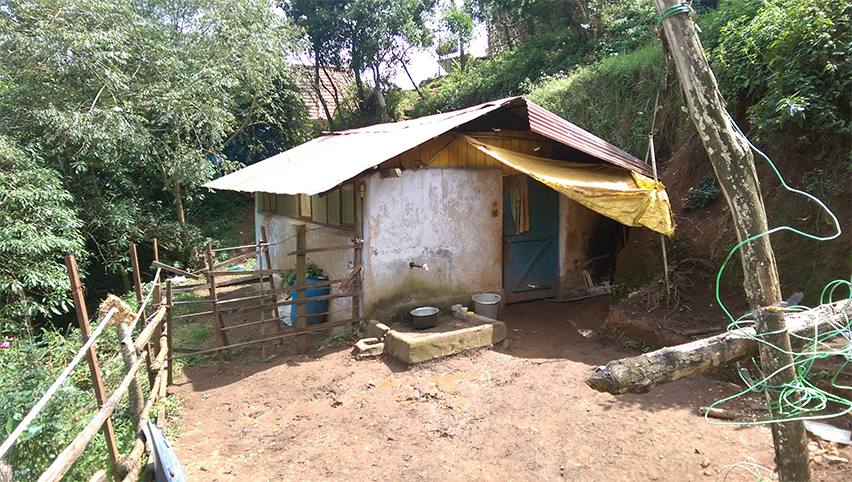
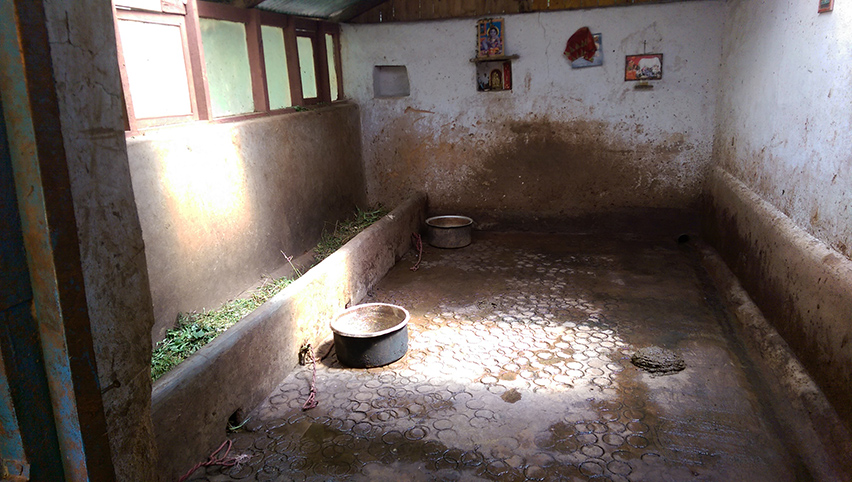
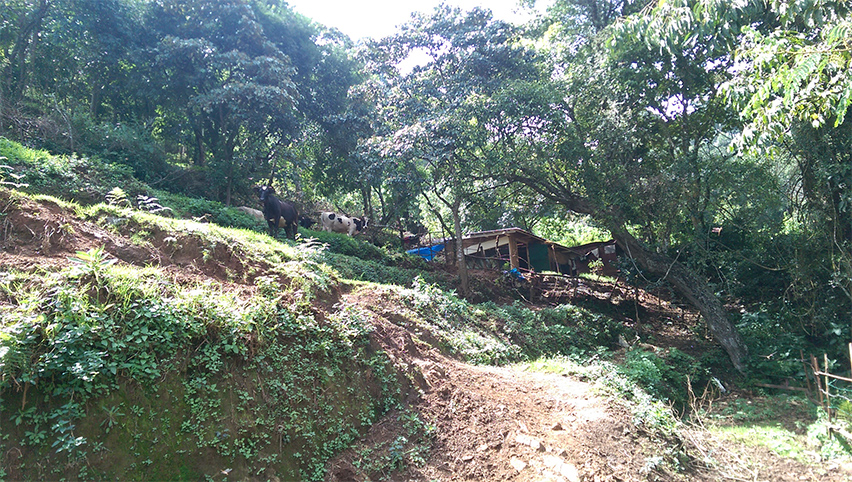
For them we've built a cow shed of cob and earth walls, and fenced a paddock so they can roam.
The bees
Bees around the world are in crisis. They are the quiet pollinators at the heart of every ecosystem — and intensive beekeeping, agrochemicals, and (some suspect) radio-frequency noise from cell networks have left them vulnerable to parasites and viruses.
In recent years there's been a quiet shift towards keeping bees in ways more aligned with their own nature — new hive designs, less honey harvested, more respect for the colony itself.
We have four hives at Karuna — two at Sangam house, one beneath the yoga hall, and one at the top of the property. Our first aim is to increase the number of bees in the area. Honey and wax are secondary.
If you'd like to visit the bees or learn more, please make an appointment with Deviani at Sangam house.